
Indian stock markets are expected to remain highly sensitive to geopolitical developments, particularly the US-Iran situation, and crude oil prices this week, with analysts also highlighting the influence of the rupee-dollar trend, foreign investor activity, and upcoming inflation data.

India has expressed serious concern over Houthi attacks on Saudi Arabia's civilian infrastructure and economic assets, stating that such actions threaten regional stability and freedom of navigation through the Bab-el-Mandeb strait. External Affairs Minister S Jaishankar discussed the issue with his Saudi counterpart. India also condemned the targeting of commercial shipping after an Indian national went missing following an attack on a Panama-flagged ship off Oman.

The Indian rupee experienced its sharpest single-day decline in eight weeks, settling at 94.83 per dollar, primarily due to escalating crude oil prices and persistent risk-off sentiment driven by heightened geopolitical tensions and limited foreign inflows.

The BRICS grouping adopted a consensus joint declaration in New Delhi, successfully navigating differences on the West Asia conflict but notably omitting any direct mention of US strikes on Iran or Iranian military attacks on Gulf Arab nations. The declaration also criticised Israel's actions in Gaza and called for a concerted approach against terrorism.

India's current account deficit could widen to 1.7 per cent of GDP, or about $71 billion, if crude oil prices stay above $90 a barrel for a significant part of the second half of FY27.

'If crude remains above $100 per barrel, with restricted retail-price increases, OMCs could face negative petrol and diesel marketing margins, higher LPG under-recoveries, higher crude-landing, freight and insurance costs, working capital and debt accumulation and inventory losses if crude subsequently corrects sharply.'

Indian investors have seen their wealth erode by a staggering Rs 48.29 lakh crore since the West Asia war began on February 28, leading to a significant downturn in the BSE Sensex and NSE Nifty, driven by geopolitical tensions and rising crude oil prices.

Indian benchmark indices Sensex and Nifty experienced a significant slump in early trade, mirroring a bearish trend in global equities, as escalating conflict in West Asia drove up crude oil prices and intensified investor concerns.

The threat has raised concerns about possible asymmetric attacks outside the region. Iran has also stepped up attacks on energy infrastructure in Gulf countries.

The West Indies and South Africa cricket teams are scheduled to leave India after being stranded due to travel restrictions caused by the Middle East conflict following their T20 World Cup campaigns.

Prime Minister Narendra Modi met Iranian President Masoud Pezeshkian at the SCO summit, advocating for dialogue and diplomacy to resolve the West Asia conflict and expressing India's desire to expand and diversify trade with Iran. Pezeshkian, in turn, urged India to leverage its contacts to promote peace.

Indian stock markets ended a five-day losing streak, with the Sensex surging 776 points and the Nifty gaining 228 points, driven by a significant drop in crude oil prices and easing geopolitical tensions in West Asia.

Lieutenant General Apti Alaudinov, deputy chief of the Russian Armed Forces' Main Military-Political Department, has warned that the escalating conflict in West Asia could lead to Israel ceasing to exist as a state, accusing Israel of seeking to widen the confrontation to involve the US and NATO.

The highlight of the successful BRICS Summit was its ability to deliver a joint statement that all members, including Iran and the United Arab Emirates, embroiled in the war in West Asia, signed.

Iranian President Masoud Pezeshkian declared that Iran will not succumb to "bullying" from the US and Israel, vowing to protect national interests amidst escalating West Asian hostilities. During his visit to New Delhi for the BRICS summit, Pezeshkian also discussed strengthening bilateral ties with Prime Minister Narendra Modi and advocated for local currencies in BRICS trade, positioning Iran as a strategic energy and transport partner.

BRICS nations have successfully reached a consensus on a joint statement following extensive negotiations, with India playing a crucial role in bridging differences, particularly among West Asian members like Iran, Saudi Arabia, and the UAE, despite regional conflicts and geopolitical tensions.

Iran's Supreme Leader Mojtaba Khamenei will not attend his father, former Supreme Leader Ali Khamenei's, funeral due to security concerns stemming from Israeli threats. This decision follows a sharp warning from Iran's Foreign Minister to the United States, urging it to control Israel after its Defence Minister reportedly marked Khamenei for death. The incident highlights escalating tensions and ongoing diplomatic efforts to de-escalate hostilities in West Asia.

Nayara Energy, India's largest private fuel retailer, has reduced petrol prices by Rs 5 per litre and diesel by Rs 3 per litre nationwide, marking the first such cut in over two years. This reduction follows easing tensions in West Asia and stabilised international crude oil prices, though public sector retailers have not yet followed suit.

United States Central Command (CENTCOM) forces have conducted a 'heavy wave of strikes' against numerous Islamic Revolutionary Guard Corps (IRGC) targets in Iran. This action was a direct response to attempted Iranian missile strikes on US forces in West Asia, which were successfully intercepted. The strikes targeted IRGC military command centres, missile and drone facilities, coastal surveillance, and maritime capabilities, aiming to reduce threats posed by Iran and its proxies. US President Donald Trump also issued strong warnings to Tehran, linking the escalation to a recent drone strike on an LNG vessel in Egypt's Damietta Port.

Precious metal prices, particularly gold and silver, experienced a significant surge in the national capital as investors sought safe-haven assets amid escalating hostilities in the Middle East.

Indian benchmark indices Sensex and Nifty experienced a significant decline in early trade, with the Sensex falling over 500 points and the Nifty over 150 points, as Brent crude oil prices surged past USD 100 per barrel due to escalating geopolitical tensions in the West Asia. track sensex, Nifty on July 24.

Indian stock market benchmark indices Sensex and Nifty recorded their second consecutive day of decline, with the Sensex dropping 555.23 points and the Nifty falling 144.05 points, primarily due to rising crude oil prices and ongoing US-Iran hostilities in West Asia.

India has once again raised alarms over the escalation in the security situation in the Red Sea area and strongly condemned Houthi strikes targeting Saudi Arabian territory, "including on civilians and economic assets."

Foreign investors have aggressively sold off Indian equities, withdrawing over 48,213 crore in the first 10 days of April, following a record 1.17 lakh crore outflow in March, driven by escalating geopolitical tensions in West Asia, rising crude oil prices, and global inflation concerns.

Electric commercial vehicle manufacturers in India are struggling to meet localisation requirements under the PM eDRIVE scheme, set to begin on Tuesday. The Society of Indian Automobile Manufacturers (Siam) has requested a seven-month extension until April 1, 2027, citing disruptions in the supply of rare earth magnets due to China's export restrictions and geopolitical tensions. The government is yet to decide on the request, which aims to prevent production disruptions and allow time for local supply chain development.

Indian benchmark indices, Sensex and Nifty, experienced declines in early trade due to a significant surge in crude oil prices, exacerbated by escalating tensions in the West Asia. Track how Sensex, Nifty fared on July 23.

India's foreign exchange reserves have surged by $12.42 billion, reaching a new all-time high of $729.33 billion for the week ended August 21, driven by increases in foreign currency assets and gold reserves.
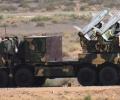
Indian defence stocks have seen an average year-on-year gain of 67 per cent, driven by renewed interest following 'Operation Sindoor' and a broader increase in global geopolitical tensions, with the combined market capitalisation of 18 firms increasing by approximately 2.3 trillion.
Indian equity markets, including the Sensex and Nifty, experienced a significant downturn for the second consecutive day, driven by escalating geopolitical tensions in West Asia and persistent foreign fund outflows.

India has condemned an attack on a Panama-flagged oil tanker off the coast of Oman, which resulted in one Indian seafarer going missing and 13 others being rescued. The Ministry of External Affairs is closely monitoring the situation and coordinating with Omani authorities for search and rescue operations, while also reiterating calls for de-escalation and safe navigation in the region.

India's private sector activity slowed to a four-year low in July, with the HSBC Flash Purchasing Managers' Index (PMI) falling to 54.3, driven by weakened sales and output amidst renewed tensions in West Asia and rising inflationary pressures.

Gold prices are expected to remain volatile next week as investors track geopolitical developments in the Middle East and key macroeconomic data releases that could shape the sentiment in the domestic market, analysts said.

Indian benchmark indices Sensex and Nifty experienced a significant slump in early trade, mirroring a sharp decline in global equities and a fresh spike in crude oil prices, exacerbated by simmering tensions in West Asia and a global unwinding of the AI-led rally. Track how sensex, Nifty fared on June 8.

The BRICS summit in New Delhi brings together leaders from major emerging economies to address global challenges like trade disputes, geopolitical upheavals, and the economic impact of conflicts in Ukraine and West Asia. India, as chair, aims to position BRICS as an economic growth engine, focusing on the Global South's food, energy, and supply chain security. The summit also highlights the grouping's expansion and its growing influence in global governance.

India is hosting the BRICS summit, leveraging the platform to address global trade tensions and champion the developmental priorities of the Global South, including food, energy, and supply chain security. The summit, attended by leaders like President Xi Jinping and Vladimir Putin, will focus on resilience, innovation, cooperation, and sustainability, with India aiming to strengthen intra-BRICS collaboration and discuss global matters. The expanded BRICS grouping represents a significant portion of the world's population and GDP, making its discussions crucial for global economic stability.

India has condemned an attack on a Cyprus-flagged commercial vessel off the coast of Oman, which resulted in one Indian crew member going missing. The incident occurred amidst escalating hostilities between Iran and the US in West Asia, prompting India to call for immediate de-escalation and an end to targeting commercial shipping in the region.

Iran's Khatam al-Anbiya Central Headquarters has threatened "continuous, effective and painful" attacks on US bases and interests across the region if Washington resumes military action against Tehran, amid escalating tensions and a US naval blockade on Iranian ports.

'Rather than deploying all their money at once, investors should invest gradually.' 'A staggered approach is the better strategy because volatility is likely to persist.'

Gold and silver are expected to remain volatile with a corrective bias as investors assess the latest flare-up in the US-Iran conflict, movements in crude oil prices, and inflation data, which could reshape expectations for global interest rates, according to analysts.

US Vice President JD Vance and Prime Minister Narendra Modi held a phone call to discuss expanding the India-US comprehensive global strategic partnership, focusing on trade, defence, energy security, emerging technologies, and critical minerals. The discussion comes amidst rising tensions in West Asia and recent regional realignments, with both leaders reaffirming their commitment to strengthening cooperation.
